
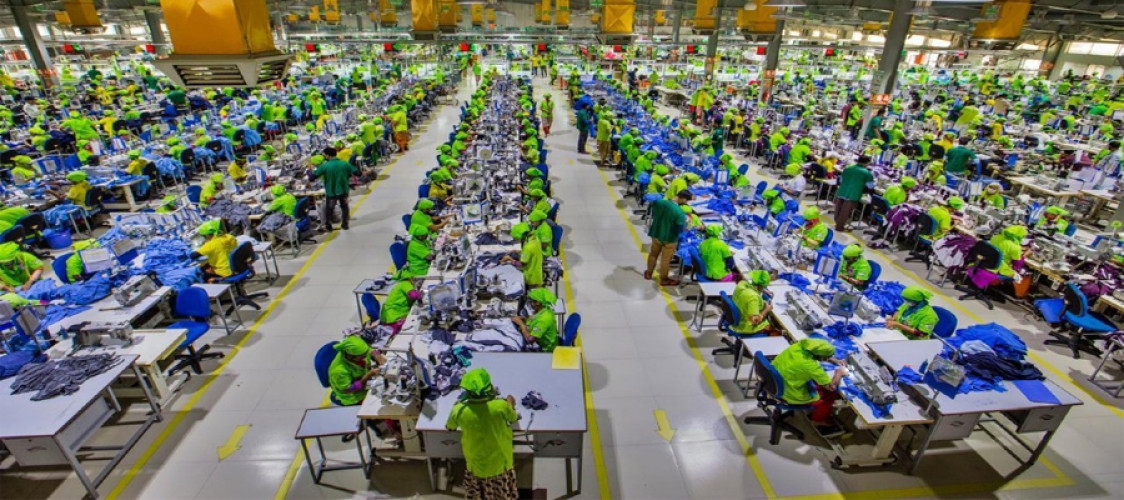
File Photo
Bangladesh's garment industry is the world's second-largest exporter of readymade garments (RMG) after China, contributing over 80% of the country's total export earnings. With over 4,000 factories employing roughly 4 million people, mostly women, the sector is a cornerstone of the economy. The industry has pivoted towards sustainability, holding the highest number of green garment factories globally.
The Readymade garments (RMG) sector in Bangladesh is a remarkable testament to resilience, innovation, and economic transformation. Over the past five decades, the industry has evolved from a humble beginning to becoming a global powerhouse, significantly shaping the nation’s economic and social landscape. Today, Bangladesh stands as the second-largest exporter of garments worldwide, and the RMG sector continues to be a cornerstone of its development. Since the very early era of Bangladesh's birth, the ready-made garments sector was established in a remarkable way. However, throughout the era, it had a prominent evaluation, and through time, the progress of the Bangladeshi RMG sector reached a significant level.
To evaluate the rise of the Bangladeshi ready-made garments sector, first of all, we have to start from the very beginning, which is laying out the foundation in the 1970s. The main industrial sector in East Pakistan (now Bangladesh) was mostly concentrated on jute in the 1970s, with minimal involvement in textiles and clothing. With an agrarian economy, the newly created Bangladesh faced an economic crisis after gaining independence in 1971. The RMG sector officially began in the late 1970s when Desh Garments, along with Daewoo of South Korea, brought improved production techniques, worker training, and technology into Bangladesh by training several Bangladeshi persons in Korea.
After overcoming versatile challenges, adaptation, and diversification, the 2020s posed a new challenge for Bangladesh—the global pandemic. The COVID-19 epidemic caused short-term setbacks by disrupting global supply networks. Nevertheless, the RMG industry showed incredible resilience, rebounding by the end of 2020. It employed about 4 million people, mostly women, and contributed 80% of Bangladesh's export revenue by 2021. The sector prioritized sustainability, adopting water-efficient processes, circular fashion, automation, and exploring new markets.
Today, Bangladesh remains the second-largest garment exporter globally. Its RMG sector is recognized for embracing eco-friendly practices and green manufacturing, with many factories achieving international certifications. While challenges persist, including rising labor costs and competition from emerging markets like Vietnam and Ethiopia, the sector's focus on diversification, innovation, and ethical practices positions it for sustained growth.
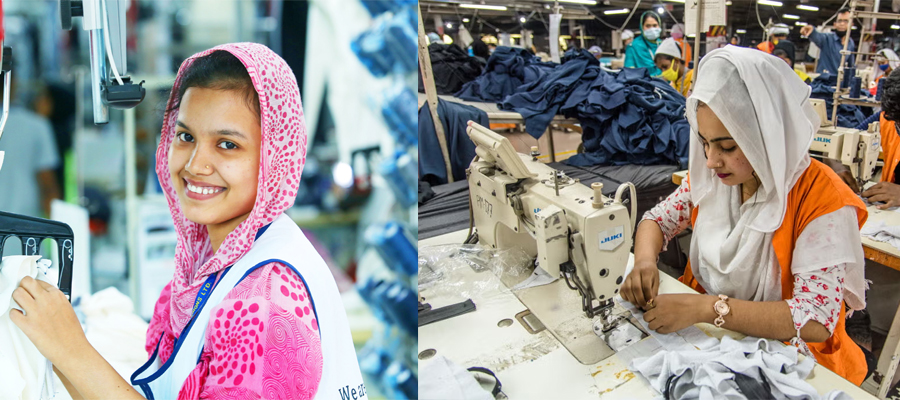
Key Aspects of the Bangladesh Garment Industry:
Bangladesh, known globally as the second-largest exporter of readymade garments (RMG), is facing severe challenges in its textile sector. This industry is crucial to the country's economy, but is currently struggling due to rising gas prices, inflation, and a natural gas shortage that hinders production. The situation is further exacerbated by intensifying worker protests over low wages and poor working conditions.
The garment industry is pivotal to Bangladesh's economic growth, attracting major brands like H&M, Levi's, GAP, and Zara. Textiles are a cornerstone of Bangladesh's economic success, with garments constituting 83% of the country's total exports as of 2022. However, since April, there has been a noticeable decline in exports.
Economic Impact: The sector is the primary source of foreign exchange, with exports reaching approximately USD 38.48 billion in 2024.
Global Position: It is a major supplier for global brands like H&M, Zara, and Primark.
Sustainability Leadership: Bangladesh has the highest number of LEED-certified green garment factories in the world.
Employment and Empowerment: The industry is a major employer, significantly contributing to women's empowerment.
Challenges: The sector faces challenges such as rising labor costs, intense competition from other emerging markets (e.g., Vietnam), and the need for further, more diverse, and sustainable growth.
Recent Developments and Trends:
Recent protests are potentially diminishing Bangladesh's reputation as a reliable export hub. This could have significant implications given the substantial foreign direct investment (FDI) the country receives for its RMG sector. Recent figures from the Export Promotion Bureau show that exports fell to $3.17 billion, a 15% decrease from the previous month. These factors contribute to 2023 being a challenging year for Bangladesh's apparel exports.
Post-COVID Recovery: The industry has shown resilience, recovering from COVID-19 with sustained growth in exports.
Safety and Compliance: Following the 2013 Rana Plaza incident, significant efforts have been made to improve safety standards, and many factories are now internationally compliant.
Modernization: There is an increasing focus on automation and technology to improve efficiency.
The industry's growth has been fueled by lower labor costs and preferential access to Western markets, making it a critical player in the global fashion supply chain.
The refusal to pay labour adequate wages raises questions about the sustainability of Bangladesh's competitive advantage. The country is set to lose its status as a least developed country (LDC) in 2026, which will bring changes in tariff structures and increased scrutiny in areas like workplace regulations, labour rights, wages, and sustainability. The current protests are a wake-up call for the country to address these long-ignored issues.
-SZK


Copyright © 2026 Gartex Expo Bangladesh. All Rights Reserved.
Website Design & Development ♡ MY SOFT IT
 EN
EN
 Chinese
 Turkish
 Indonesian
 German
 French
 Spanish
 Portuguese
 Russian
 Italian